What EXIF Tags Mean: A Real Dump, Tag by Tag
By Junaid Aslam. 8 min read. Updated .
EXIF is a block of named values inside a photo file. The names are fixed by the CIPA Exif standard, and the values describe the camera, the exposure, the time, and sometimes the place. This guide shows a real dump from a CC0 photo and explains every row the EXIF Viewer printed.
The test photo is a Canon EOS R file with 21 EXIF tags and no GPS. The dump below is what the page showed. We then wrote five GPS tags into a copy with piexif, so the location rows have a real example. That edit is disclosed in the GPS section.
The test photo
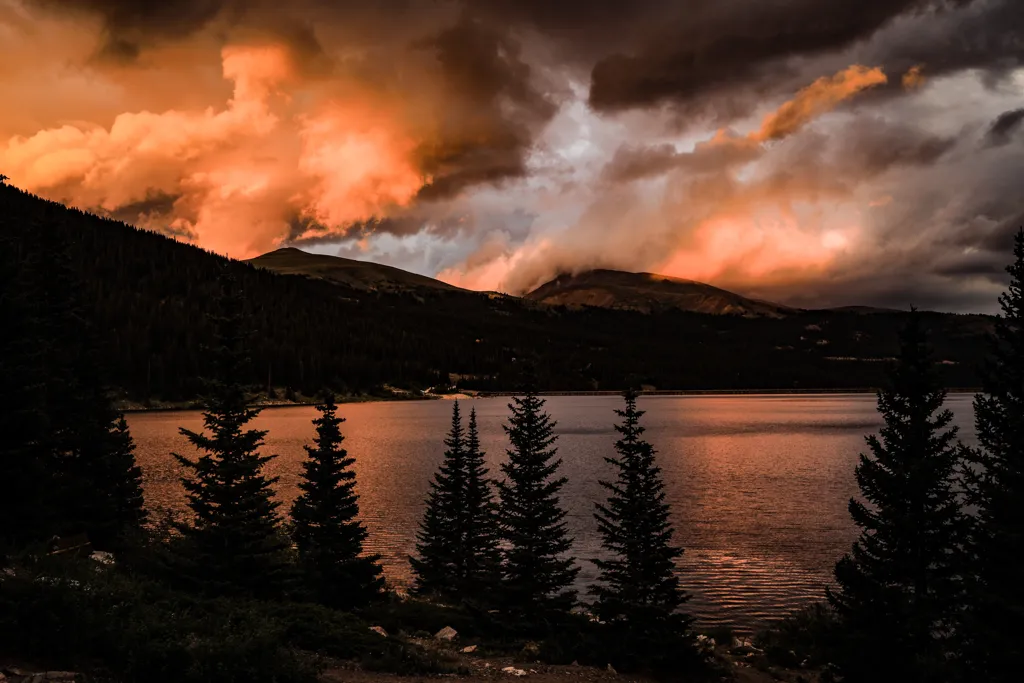
| Item | Value |
|---|---|
| Title | Mountain Lake Sunset |
| Author | Thomas Elliott, Flickr name 420 Photography |
| License | Public Domain Dedication (CC0) |
| Original size | 6,615,783 bytes |
| Pixels | 6720 x 4480 |
| Camera in the file | Canon EOS R |
| Lens in the file | EF24-70mm f/2.8L II USM |
| GPS in the original | None |
We opened the file page and its All Sizes page on 2026-11-17. The license line reads "Public Domain Dedication (CC0)" and links to the CC0 1.0 deed. The original is available for download under that license.
How the dump was made
We uploaded the original JPEG to the EXIF Viewer on a local production build of commit 975c67a (Next.js 14.2.35) on 2026-11-17. The browser was Chromium at 1280 by 1000, driven by Playwright. The page parses the file in the browser with the exifr library and prints four groups: Camera, Timestamps, Technical, and Other.
The table below is the rendered output. The viewer converts some values for display, so the raw tag text can differ. The important cases are called out under the table.
The dump, as the viewer shows it
| Group | Tag | Value |
|---|---|---|
| Camera | ExposureProgram | Aperture priority |
| Camera | ExposureTime | 0.1 |
| Camera | Flash | Flash did not fire |
| Camera | FNumber | 8 |
| Camera | FocalLength | 31 |
| Camera | ISO | 100 |
| Camera | LensModel | EF24-70mm f/2.8L II USM |
| Camera | Make | Canon |
| Camera | MeteringMode | Pattern |
| Camera | Model | Canon EOS R |
| Timestamps | DateCreated | 20190802 |
| Timestamps | DateTimeOriginal | 8/2/2019, 7:09:34 PM |
| Timestamps | SubSecTimeOriginal | 64 |
| Timestamps | TimeCreated | 190934 |
| Technical | ExifImageHeight | 4480 |
| Technical | ExifImageWidth | 6720 |
| Technical | XResolution | 72 |
| Technical | YResolution | 72 |
| Other | ApertureValue | 6 |
| Other | ApplicationRecordVersion | [raw bytes 00 02] |
| Other | Copyright | Thomas ELLIOTT |
| Other | CopyrightNotice | Thomas ELLIOTT |
| Other | ExposureCompensation | 0 |
| Other | JFIFVersion | 257 |
| Other | Lens | EF24-70mm f/2.8L II USM |
| Other | MaxApertureValue | 3 |
| Other | ResolutionUnit | 0 |
| Other | rights | {"lang":"x-default","value":"Thomas ELLIOTT"} |
| Other | SerialNumber | 042021004122 |
| Other | ShutterSpeedValue | 3.321927997619756 |
| Other | ThumbnailHeight | 0 |
| Other | ThumbnailWidth | 0 |
The viewer prints ApplicationRecordVersion as two control characters. We wrote them as their bytes, 00 02, because they are not readable text.
Camera tags
| Tag | What the value means | Source |
|---|---|---|
| Make | The camera maker. Canon. | CIPA 4.6.4, ExifTool EXIF |
| Model | The camera model. Canon EOS R. | CIPA 4.6.4, ExifTool EXIF |
| LensModel | The lens name. EF24-70mm f/2.8L II USM. | CIPA Table 8, ExifTool EXIF |
| FocalLength | The lens focal length in mm. 31 mm. | CIPA section G, ExifTool EXIF |
| FNumber | The f number. f/8. | CIPA section G, ExifTool EXIF |
| ExposureTime | The exposure time in seconds. 0.1 s, or 1/10 s. | CIPA section G, ExifTool EXIF |
| ISO | The photographic sensitivity. ISO 100. | CIPA Table 8, ExifTool EXIF |
| ExposureProgram | The camera mode. 3 = Aperture priority. | CIPA section G, ExifTool EXIF |
| MeteringMode | The metering pattern. 5 = Multi-segment. The viewer prints Pattern. | ExifTool EXIF |
| Flash | The flash state. 0 = No Flash, printed as Flash did not fire. | ExifTool EXIF |
Three tags store an APEX value instead of the number on the dial. ShutterSpeedValue is 3.321927997619756. The exposure time is 2 to the power of minus that value, which is 0.1 s. ApertureValue is 6, and the f number is 2 to the power of 3, which is f/8. MaxApertureValue is 3, which is f/2.8, the widest aperture of this lens. The CIPA spec gives the tags, and the ExifTool page states that both values are stored as APEX. The arithmetic is ours.
Timestamp tags
DateTimeOriginal stores the time the camera took the photo. The CIPA spec gives the format as YYYY:MM:DD HH:MM:SS, so the raw text in this file is 2019:08:02 19:09:34. The viewer turns that into a local date and prints 8/2/2019, 7:09:34 PM. The change is display only.
SubSecTimeOriginal holds the fraction of that second as text. The value is 64, which reads as 0.64 s. The CIPA spec lists the tag as a text field of any length, and ExifTool describes it as the fractional seconds for DateTimeOriginal.
DateCreated (20190802) and TimeCreated (190934) are IPTC fields, not EXIF. The viewer reads IPTC and XMP too, then groups any key with date or time in the name under Timestamps. They repeat the same moment in a different block.
Technical tags
| Tag | What the value means |
|---|---|
| ExifImageWidth | The image width in pixels. 6720. CIPA calls this PixelXDimension. |
| ExifImageHeight | The image height in pixels. 4480. CIPA calls this PixelYDimension. |
| XResolution | The horizontal resolution number. 72. |
| YResolution | The vertical resolution number. 72. |
| ResolutionUnit | The unit for the two resolution values. 0 is outside the listed values (2 = inches, 3 = cm). |
| ThumbnailWidth | The width of the IFD1 thumbnail. 0 because this file has no thumbnail. |
| ThumbnailHeight | The height of the IFD1 thumbnail. 0 because this file has no thumbnail. |
The width and height match the original file. The resolution pair has no unit that the standard defines here, because the unit tag reads 0. Treat those two rows as unset.
The rows that are not EXIF
A JPEG can carry several metadata blocks. The viewer reads them all, so some rows come from IPTC, XMP, or JFIF. They still describe the file, and they are easy to confuse with EXIF.
| Row | Block | What it is |
|---|---|---|
| ApplicationRecordVersion | IPTC | The IPTC record version. The viewer prints the raw bytes. |
| Copyright | EXIF | The copyright text. Thomas ELLIOTT. |
| CopyrightNotice | IPTC | The same name in the IPTC block. |
| rights | XMP | The same name in XMP, stored as a language map. |
| Lens | XMP | A second copy of the lens name. |
| JFIFVersion | JFIF | The JFIF version number, printed as 257. |
| DateCreated | IPTC | The date in IPTC form. |
| TimeCreated | IPTC | The time in IPTC form. |
Three rows carry the photographer name: Copyright, CopyrightNotice, and rights. They come from three blocks. A tool that removes one block can leave the other two in place.
Other EXIF rows
| Tag | What the value means |
|---|---|
| ApertureValue | The aperture as an APEX value. 6, which is f/8. |
| MaxApertureValue | The widest aperture as an APEX value. 3, which is f/2.8. |
| ShutterSpeedValue | The shutter speed as an APEX value. 3.322, which is 0.1 s. |
| ExposureCompensation | The exposure bias in EV. 0 means no bias. |
| SerialNumber | The camera body serial number. 042021004122. |
The serial number is the most sensitive row in this dump. It ties the file to one camera body. A photo can carry that link even when it has no GPS.
GPS tags, with a disclosed edit
The original file has no GPS block. To show the tags, we loaded the original with piexif and wrote five values into a copy. The coordinates are a test value, not a claim about where this photo was taken. They point to central London.
GPSVersionID: (2, 3, 0, 0)
GPSLatitudeRef: N
GPSLatitude: ((51, 1), (30, 1), (2664, 100))
GPSLongitudeRef: W
GPSLongitude: ((0, 1), (7, 1), (4008, 100))
We uploaded the edited copy to the same viewer. It added a Location group and a map card with 51.507400, -0.127800.
| Group | Tag | Value |
|---|---|---|
| Location | GPSLatitude | [51,30,26.64] |
| Location | GPSLatitudeRef | N |
| Location | GPSLongitude | [0,7,40.08] |
| Location | GPSLongitudeRef | W |
| Location | GPSVersionID | 2.3.0.0 |
| Location | latitude | 51.5074 |
| Location | longitude | -0.1278 |
The latitude is three numbers: degrees, minutes, and seconds. 51, 30, and 26.64 become 51.5074 degrees north. The longitude is 0, 7, and 40.08, which becomes 0.1278 degrees west. The viewer computes the last two rows from the first five. They are not separate tags in the file.
The edit also changed the rest of the dump. The copy lost the JFIF, thumbnail, and resolution rows, because piexif rebuilt the file. That is a useful warning: a tool that writes one tag can drop another block.
The CIPA spec defines the GPS block as its own IFD. ExifTool lists the five tags above and states that a writer should set the latitude, its ref, the longitude, and its ref together, with altitude if known. A latitude without its ref is ambiguous.
What this dump tells you
- The camera, lens, exposure, and time are easy to read. They match the settings a photographer would expect for a sunset at f/8 and 1/10 s.
- The body serial number links the file to one camera. It survives a copy unless a tool rewrites the EXIF block.
- The photographer name sits in three blocks. Removing one does not remove the others.
- The original has no location. A five-tag edit added one, and the viewer displayed it at once.
- A missing row can mean the camera did not write it, or a tool removed it. The file alone cannot tell you which.
Use the EXIF Viewer before you share a photo. It shows the same groups and can strip the metadata. The guide on the analyzer data path shows when an upload keeps this block and when a Canvas resize removes it.
Tested on
2026-11-17, against commit 975c67a on a local production build (Next.js 14.2.35). The EXIF Viewer ran in Chromium at 1280 by 1000 through Playwright. The original file is 6,615,783 bytes. The GPS copy was written with piexif 1.1.3 in Python 3.10. The primary text checks used the CIPA DC-008-2012 PDF and the ExifTool tag pages, both opened on the same day.
Primary sources
- CIPA DC-008-2012: Exchangeable image file format for digital still cameras: Exif Version 2.3: tag names, tag IDs, data types, the date format, and the GPS IFD.
- ExifTool: EXIF Tags: tag meanings, the APEX note, metering values, flash values, and the note that
ExifImageWidthis called PixelXDimension by the spec. - ExifTool: GPS Tags: the five location tags, the refs, and the guidance to write them together.
Photo credits
- Mountain Lake Sunset: Thomas Elliott (420 Photography), CC0, file page and license line.
The file page and the All Sizes page show the label Public Domain Dedication (CC0) with a link to the CC0 1.0 deed. We opened both pages on 2026-11-17.
Related tools
- EXIF Viewer: read or remove the tags in this guide.
- AI Image Analyzer: ask about a photo without reading its metadata.
- Image Converter: re-encode a photo, which usually drops the EXIF block.
- Image to Text: read the pixels, not the tags.