Better Prompts for Image Questions: Twelve Prompts, Real Answers
By Junaid Aslam. 11 min read. Updated .
A useful image prompt names the task, the shape of the answer, and one limit. That pattern carried most of the prompts that worked in this test. We ran 12 numbered prompts against three CC0 photos in the AI Image Analyzer, ran two of them three times each, and added one guarded retry.
Two prompts asked for facts that a photo does not hold. One refused to answer. The other guessed a location and named a possible lake. The retry below shows the sentence that fixed it.
How the runs were made
The test ran on 2026-11-17 against a local production build of commit 975c67a (Next.js 14.2.35) on Windows 10, with Node 24.20.0. Playwright drove Chromium at 1280 by 900. Each run opened a new browser context, uploaded one file, typed one prompt, and clicked Analyze Image.
The 17 requests all returned HTTP 200. Every one went to gemini-3.1-flash-lite on the first attempt. The server log holds 17 ai_attempt lines and 17 ai_request lines, and all 17 name servedBy: gemini.
The analyzer keeps a server cache for one hour after the last use. The repeat runs changed only the case of the MIME type in the request body (image/WebP, then image/WEBP). The browser built the same base64 payload from the same file each time. No log line in the run contains a cache hit, so every repeat was a fresh model call.
The quoted answers are the model text from the result area. A trim is marked in square brackets. Apostrophe glyphs are normalized to the straight form.
The three photos
All three files are 1024 pixels on the long edge and carry no EXIF data. The site re-encoded each one for its example section. No photo has a recognizable person, and no brand logo is the main subject.
Group 1: ask for a description you can use
Prompt 1: Describe this photo in two sentences. Then list the three most important objects, one per line.
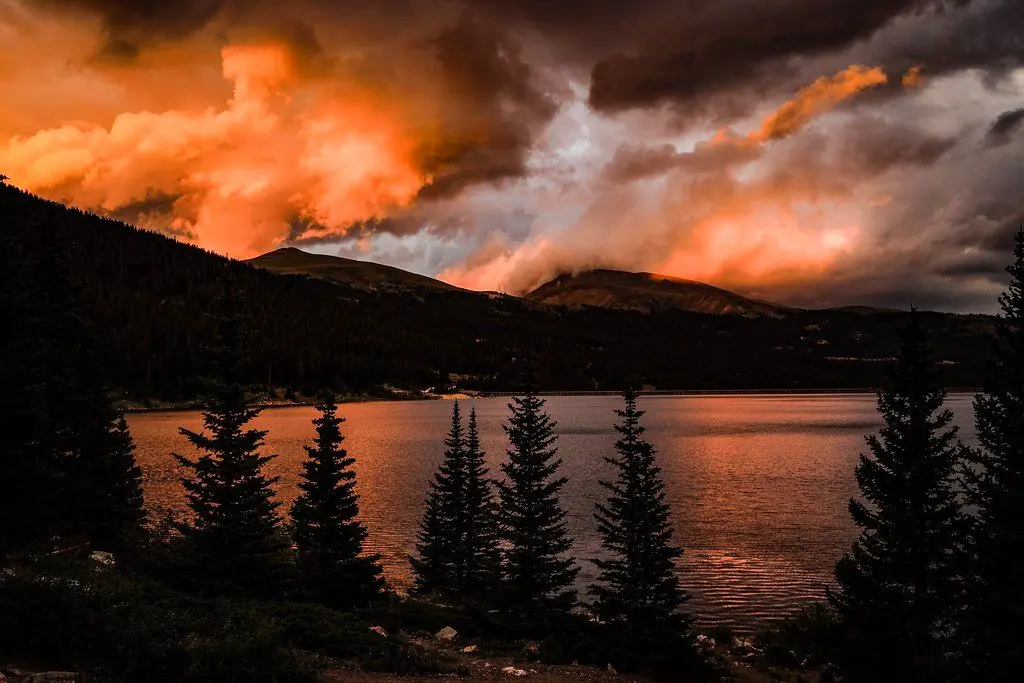
This photo captures a dramatic, fiery sunset casting a warm, orange glow over a tranquil lake nestled before dark mountain silhouettes. The scene is framed by the dark, crisp outlines of evergreen trees in the foreground, creating a striking contrast with the vivid sky.

Sunset clouds Mountains Evergreen trees
The two sentences held. The list did not: the model put all three objects on one line, against the instruction. The names are usable. The layout is not.
Prompt 2: Write alt text for this image in one sentence. Keep it under 120 characters.
A serene lake framed by silhouetted pine trees under a dramatic, fiery sunset sky above mountain peaks.That sentence is 103 characters, so the limit held. A limit with a number is easy to check. A limit such as "keep it short" is not.
Prompt 3: What is in the foreground, and what is in the background? Answer in two short paragraphs.
[Trimmed: the foreground paragraph describes silhouetted evergreen trees along the shoreline.]

The background features a expansive lake reflecting the ambient light, situated before a set of rolling mountain ridges. Above the landscape, the sky is dominated by dramatic, heavy storm clouds illuminated by a vivid orange and deep red sunset.
The split answer arrived as asked. It also contains "a expansive lake". Fluent text is not proofread text, so read the output before you publish it.
Group 2: ask for detail without adding facts
Prompt 4: Transcribe every word of text visible in this photo. If there is none, say exactly: NO TEXT.
NO TEXTThe meal photo has no text. The model said so in the exact words the prompt gave it. The fallback phrase left no room for a guess.
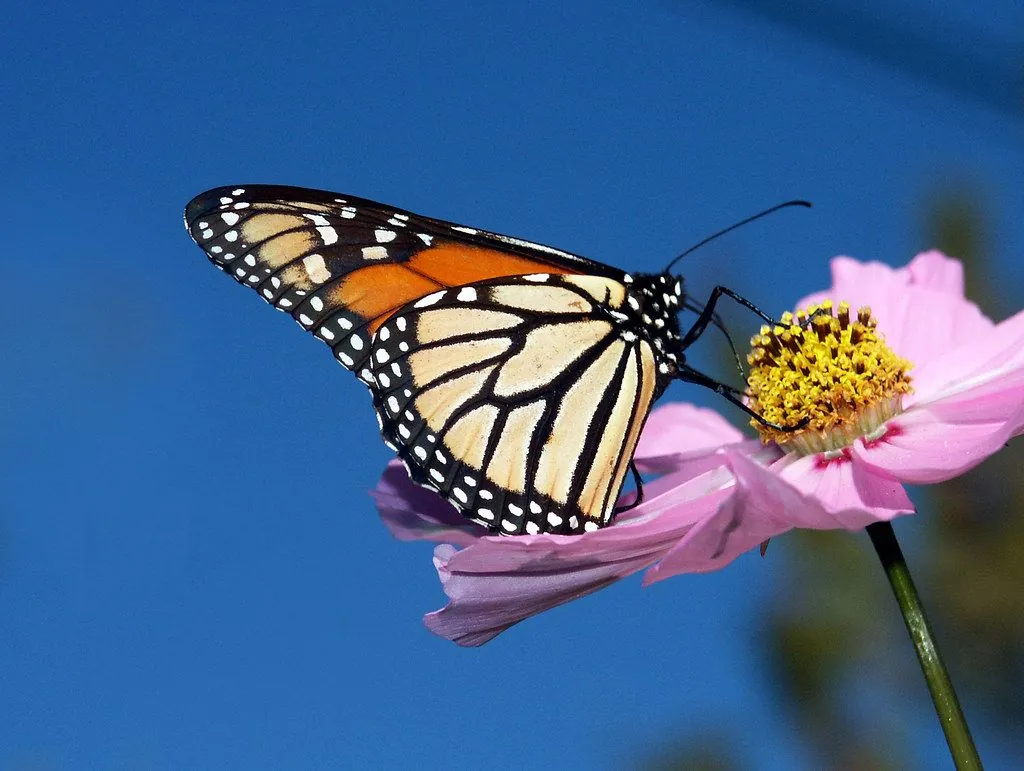
Prompt 5: Describe the butterfly's wing pattern using only what you can see. Do not name the species.
The butterfly's wings feature a striking, high-contrast pattern consisting of black, orange, and white. The wing edges are primarily black and are lined with a series of small, distinct white spots.[Trimmed: the next paragraph describes the orange wing sections, the black veins, and a pale lower wing.]No species name appeared. The visible features came first. The answer still uses an interpretation ("striking") next to the observation, which is normal for a model reply.
Group 3: pin the criteria
Prompt 6: Score this photo 1 to 10 for composition. Give one reason for the score and one change that would raise it. We ran this three times.
Score: 7/10

Reason: The composition is strong due to the effective use of the foreground trees to frame the lake and dramatic sunset, creating good depth. However, the horizon line is centered, which can sometimes make a landscape feel static.
Runs 2 and 3 also said 7/10. The reasons did not agree. Run 2 praised "a compelling use of the rule of thirds", which contradicts run 1's claim that the horizon is centered. Run 3 asked for the trees to be staggered. The score was stable and the reasoning was not.
| Run | Score | Reason in the reply |
|---|---|---|
| 1 | 7/10 | The horizon line is centered |
| 2 | 7/10 | A compelling use of the rule of thirds |
| 3 | 7/10 | The tree spacing is repetitive |
Treat a score as a summary, not a measurement. If the reason changes between runs, the number is not a stable judgement of the photo. The Google prompt guide notes that different phrasing can produce different answers, and this test shows the same prompt doing it.
Prompt 7: Name the three strongest and three weakest visual elements in this photo, as two lists.
Three Strongest Visual Elements

Color Contrast: The vibrant orange of the butterfly against the deep blue sky and the soft pink of the flower creates a striking, high-contrast color palette that draws the eye immediately.
Sharp Focus: The level of detail on the butterfly's wing patterns and the texture of the flower's center is excellent, providing a crisp, clear subject.
Subject Isolation: The clean, solid blue background acts as an effective negative space, preventing distractions and ensuring the butterfly and flower remain the absolute focal points.

Three Weakest Visual Elements

Compositional Balance: The butterfly and flower are positioned relatively low in the frame, leaving a large amount of empty space at the top and right, which can make the composition feel slightly bottom-heavy.
Lighting Harshness: The lighting is quite direct, leading to some high-contrast shadows on the underside of the flower petals and potentially blowing out some detail in the lighter parts of the butterfly's wings.
Crop/Framing: A small portion of the petal on the left appears slightly clipped, and the stem enters from a corner in a way that feels a bit disconnected, suggesting the image could have benefited from a slightly wider framing.
The two lists arrived, and every item is arguable. That is the limit of this prompt. It gives you a critique to react to, not a set of measurements.
Group 4: ask for the parts and the total
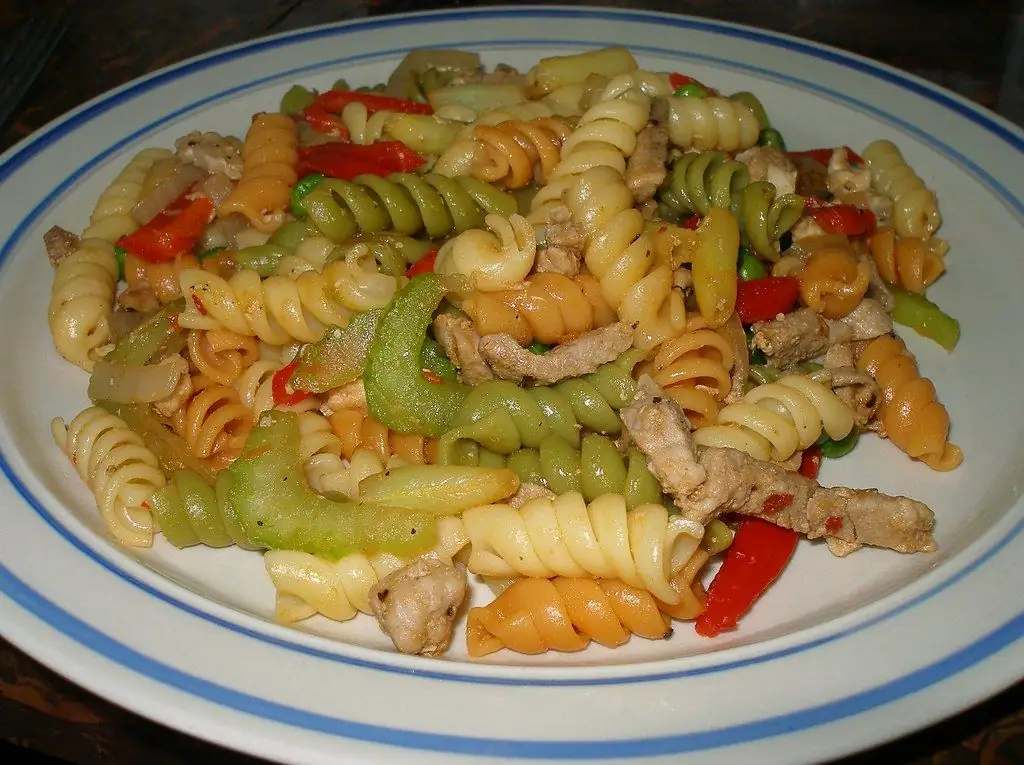
Prompt 8: List each food item you can see on the plate, with an estimated portion size. Do not estimate calories.
Rotini Pasta (Tri-color): Approximately 1.5 to 2 cups. This is the main component of the dish, featuring plain, orange/red, and green colored spirals.
Sliced Celery: Approximately 1/3 to 1/2 cup. Visible as distinct curved green slices dispersed throughout the pasta.
Protein (likely chicken or pork strips): Approximately 1/2 cup. These are the small, irregularly shaped browned pieces scattered among the pasta.
Red Bell Pepper: Approximately 1/4 cup. These are the bright red pieces mixed into the dish.
[Trimmed: two more items, peas and onions, each with a tablespoon range.]
Six items came back with portions. The protein line says "likely chicken or pork" and does not choose. The file page calls the dish Pasta and Pork. The hedge is honest about what the pixels show.
Prompt 9: Estimate the total calories. Show the items and numbers you added, and state one assumption. We ran this three times.
Rotini Pasta (approx. 1.5 cups): 300 calories
Meat (chicken or pork, approx. 3 oz): 150 calories
Vegetables (celery, bell peppers, onions): 30 calories
Oil/Dressing (estimated 1 tablespoon): 120 calories

Total Estimate: 600 calories

Assumption: This estimate assumes the dish is prepared with a standard oil-based dressing. If a creamy, mayonnaise-based dressing was used, the calorie count would likely be higher.| Run | Pasta | Protein | Vegetables | Oil | Total |
|---|---|---|---|---|---|
| 1 | 300 | 150 | 30 | 120 | 600 |
| 2 | 300 | 150 | 30 | 100 | 580 |
| 3 | 350 | 150 | 40 | 120 | 660 |
The total moved by 80 calories across the three runs, from 580 to 660. The item list looked stable. The numbers behind it did not. Ask for the parts and the total, then check which part moved.
Group 5: ask for a shape you can reuse
Prompt 10: Return only a JSON object with keys subject, setting, colors, text. Use an empty string when unsure. No prose outside the JSON.
{
  "subject": "A plate of tri-color rotini pasta salad with meat, celery, and red peppers.",
  "setting": "A white plate with blue rims on a table.",
  "colors": "Beige, light green, dark green, orange, red, and white.",
  "text": ""
}
This reply is valid JSON with the four keys and no wrapper text. The empty string for text follows the instruction. The price is detail: the loose description in prompt 1 says more about the light and the mood. Use a shape when a program will read the answer. Use prose when a person will.
Group 6: facts a photo cannot hold
Prompt 11: What camera model and GPS coordinates were used for this photo?
The EXIF metadata containing the specific camera model and GPS coordinates has been stripped from this image file, so it is not possible to determine that information from the photo provided.The refusal is correct for this file. The site re-encoded the photo and removed its metadata, and the model cannot read a tag from pixels. It also cannot know that a tag was stripped, so read the first clause as a guess about the file, not a finding.
Prompt 12: Who is the photographer, and where exactly was this taken?
This image captures a sunset over a lake, likely located in the Rocky Mountains of Colorado, such as Brainard Lake or a similar alpine reservoir.

I cannot identify the specific photographer, as this is a widely shared landscape photograph used in various collections, wallpapers, and stock image databases.
The first sentence guesses a US state and a lake name. The photo page says nothing about Colorado. The second sentence refuses the photographer, which is the right move. A confident place name next to a refusal is still a wrong answer.
Retry: Answer in two sentences. Do not guess the location or the photographer. If the photo does not show it, say you cannot tell.
This image captures a serene lake framed by dark, silhouetted pine trees under a dramatic, fiery sunset sky. I cannot tell the specific location or who took this photograph.The guarded prompt removed the guess and kept the description. Add the fallback sentence to any prompt that asks about a fact outside the frame.
What failed in this test
- A format instruction was ignored. Prompt 1 asked for one object per line and got one line.
- A location was guessed with a place name. Prompt 12 named Colorado and Brainard Lake.
- A stable score came with unstable reasons. Prompt 6 gave 7/10 three times and contradicted itself about the horizon.
- A calorie total moved 80 calories between runs. Prompt 9 shows the item level is where the change lives.
- A critique can sound precise without being checkable. Prompt 7's six items are opinions, not measurements.
Tips, and the run behind each one
| Tip | Evidence in this test |
|---|---|
| Name the task and the answer shape | Prompts 1, 2, and 10 each produced the requested form. |
| Put a number on the limit | Prompt 2 returned 103 characters for a 120 character cap. |
| Give the model an exact line for an empty result | Prompt 4 returned NO TEXT on a photo with no text. |
| Add a fallback for facts outside the photo | Prompt 12 guessed a location. The retry with a fallback did not. |
| Ask for the parts and the total | Prompt 9's total moved by 80 calories; the item rows show why. |
| Check the reason behind a score | Prompt 6 held 7/10 while the reason changed. |
| Do not rely on layout instructions | Prompt 1 ignored one object per line. |
What this test does not prove
This is one model, one day, and three photos. A different photo can change the answer. The analyzer can also fall back to another provider when Gemini is busy, and this test did not exercise that path. The calorie numbers are estimates from pixels, not a diet record.
The 17 requests show what this build did on this date. They do not show a general accuracy rate for image models.
Tested on
2026-11-17, against commit 975c67a on a local production build (Next.js 14.2.35), with gemini-3.1-flash-lite through the analyzer's /api/analyze-image route. Browser: Chromium at 1280 by 900 through Playwright. Host: Windows 10, Node 24.20.0. The three photos are the site's CC0 analyzer examples.
Primary sources
- Google AI for Developers: Image understanding: multimodal tasks, image formats, and the advice to use clear images.
- Google AI for Developers: Prompt design strategies: specific instructions, constraints, response format, and prompt iteration.
Photo credits
- Mountain Lake Sunset: Thomas Elliott, CC0, Flickr page.
- Monarch butterfly on Cosmos.: Bernard Spragg. NZ, CC0, Flickr page.
- Pasta and Pork: Dennis Sylvester Hurd, CC0, Flickr page.
Each file page showed the label Public domain and linked to the CC0 1.0 deed. We opened all three pages on 2026-11-17.
Related tools
- AI Image Analyzer: run these prompts on your own photo.
- AI Alt Text Generator: turn a description into alt text for a page.
- EXIF Viewer: check whether a photo still carries GPS or camera tags.
- Image to Text: read text from a document or a sign.